How social media is shaping dental trends in America
In a recent study, over a third of Americans (34%) said that they turn to social media for oral health advice. Using platforms like TikTok and Instagram, millions now scroll through health and wellness content daily, seeking dental care tips that they can put into practice at home.
Hashtags like #Dentist (with over 2.4 billion views) and #Teethwhitening (featured in more than 300,000 posts) highlight just how widespread dental content has become. But while some of this content is created by professionals, many trending hacks lack credibility, leading to unsafe and unregulated dental practices.
With this in mind, we’ve done a deep dive into the world of social media dental trends, investigating the overall sentiment across various platforms. With the aim of educating audiences on the importance of safe, expert-backed oral care, we’ll also offer insights on avoiding social media dental traps.
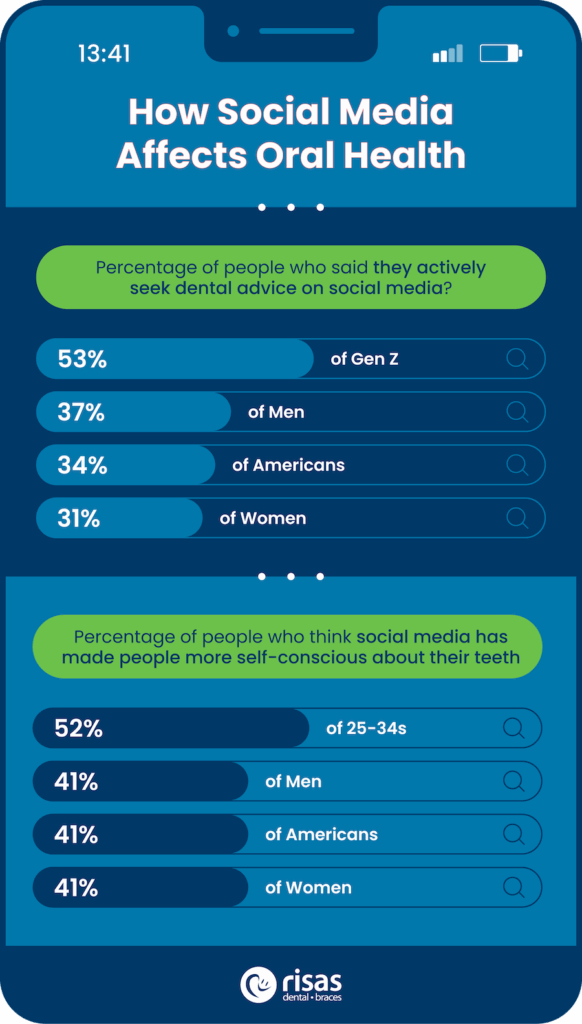
How many people actively seek oral health advice on social media?
Our survey found that 34% of people are seeking oral health advice on social media. Digging deeper, we found that men are slightly more likely to turn to platforms like TikTok and Instagram for advice (37%) compared to around 31% of females.
The generational divide is even more striking. Among Gen Z (roughly those ages 18-24) 53% said that they use social media for dental advice, signaling that younger people are more comfortable in turning to online platforms.
Has social media made people more self-conscious about their smiles?
Social media seems to also be influencing how people feel about their smiles, with 41% admitting that it has made them feel self-conscious. This response was consistent across the board, with 41% of males and 41% of females agreeing.
The 25-34 age group is especially affected, with over half of people admitting that they’ve felt insecure about their teeth after consuming content online. With picture perfect smiles splashed across feeds, it’s no surprise that people are rushing into DIY treatments that promise impressive results.
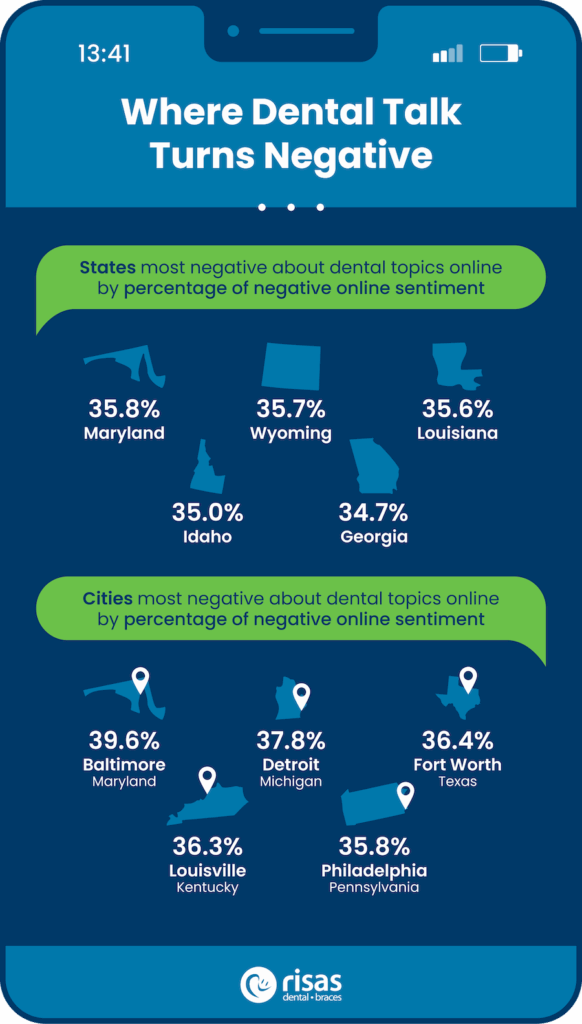
States and cities with the most negative online sentiment
Online talk around dental trends certainly isn’t always positive, but which states and cities are expressing the most negative sentiment?
Well, Maryland leads the way, with 35.8% of people expressing negativity around dental topics. Close behind we have Wyoming (35.7%) and Louisiana (35.6%), with Idaho and Georgia rounding off the top five (35.0% and 34.7%).
When we narrow the focus down to cities, Baltimore comes in first place (39.6%), with Detroit in second (37.8%). Plenty of people are expressing negative sentiment in Ft. Worth (36.4%) as well as Louisville (36.3%) and Philadelphia, (35.8%).
States and cities with the most online dental conversations
While some states express dissatisfaction, others are simply more active when it comes to discussing dental care online. The District of Columbia tops the ranking for this, with a huge 350.81 dental-themed conversations per 10,000 residents. Nevada and Florida come in next, with 56.76 and 53.46 conversations, followed by New York (with a score of 50.55). Texas steals the final spot, with 50.12 dental conversations per 10,000.
When we dive into city data, Atlanta stands out, with a whopping 158.72 online conversations per 10,000 residents. Houston comes in second with 106.42, followed by Oklahoma City with 89.01. Rounding things off, we have New York (82.80), and Washington D.C (73.69).
Which social media platforms have the highest share of dental content?
Finally, let’s take a look at the social media platforms with the most dental content circulating. Twitter takes the top spot, with an impressive 13,193,085 dental-related mentions. Of these, 23% had a negative tone, while 45% expressed positive sentiments.
We found 1,418,068 conversations on Reddit, many of which were more critical (38% compared to 21% positive). The platform’s long-form content discussion boards leave plenty of room for dialogue to open up around dental trends, procedures, and costs.
Finally, we found just under half a million (469,682) mentions on YouTube, with more positive conversations featured (41%) than negative (29%).
The importance of avoiding social media dental traps
So, it’s clear that many people are searching for tips to improve their teeth online. However, the only guaranteed way to maintain a healthy, confident smile is by trusting expert-backed care:
“While social media can be a great tool for tips and advice, it’s important to remember that what’s trending isn’t always trustworthy. DIY treatments like at-home whitening can lead to issues such as enamel damage, gum irritation, and long-term sensitivity, so it’s important to stay wary.”
“It might seem convenient and cost-effective to try out a trending hack, but untested products and procedures can actually do more harm than good. Dental professionals, on the other hand, will consider your unique oral history, identifying issues and recommending treatments tailored to your needs. So, for the best possible results, seeking professional care is key.”
With social media shaping real-life dental decisions across the country, Dr. Elizabeth Walton at Risas Dental has pulled together some final insights on how you can spot harmful advice: “Be wary of anything trending on social media. If someone promises you, they have discovered a miracle cure for at home whitening, they really found a miracle way to get more "likes" and reposts. There is really no substitute for regular home care such as brushing, flossing and regular visits to the dentist. Following through on recommendations by your trusted dentist will ensure a healthy lifetime with a happy mouth!”
“If time could be spent doing regular home care, you wouldn't be needing a miracle cure! If you are having problems getting your kid to brush their teeth, don't spend a lot of money on new gadgets.
“Go see your pediatric dentist and learn how to modify the behavior instead. If you see something trending and wonder if it is a good idea, check and see what the ADA or AAPD think.
“In general, don't put anything in your mouth or on your teeth that is abrasive or not safe to swallow. If it not a product endorsed by the ADA, ask your dentist or physician before using it!” Well, there you have it: our insights on social media dental trends across America. While you may well find some expert-backed tips floating around online, it’s important to stay vigilant for content that’s going to harm rather than help your teeth.
The most important way to ensure you maintain a healthy smile is by scheduling regular checkups. From cleanings to extractions and exams, we offer a variety of services plus personalized, expert oral health guidance here at Risas Dental. Find a location near you and make an appointment today.
A single toothbrush can harbor more than one million bacteria—a shocking statistic when you consider that its purpose is to keep your mouth clean and healthy.
To uncover just how much bacteria is really lurking, the team at Risas Dental conducted an experiment using an advanced ATP bioluminescence testing method. We’ve measured the amount of adenosine triphosphate - a molecule found in and around living cells – on each of our participants’ toothbrushes.
Swabs were taken using Hygiena’s UltraSnap Surface ATP Test and EnSURE Touch monitoring system to provide RLU (Relative Light Unit) readings. And the higher the RLU result, the more bacteria present.
But are there differences between the cleanliness of our male and female participants’ toothbrushes? And what about other areas in their bathrooms? Let’s dive in to find out just how clean (or dirty) the average American toothbrush really is…
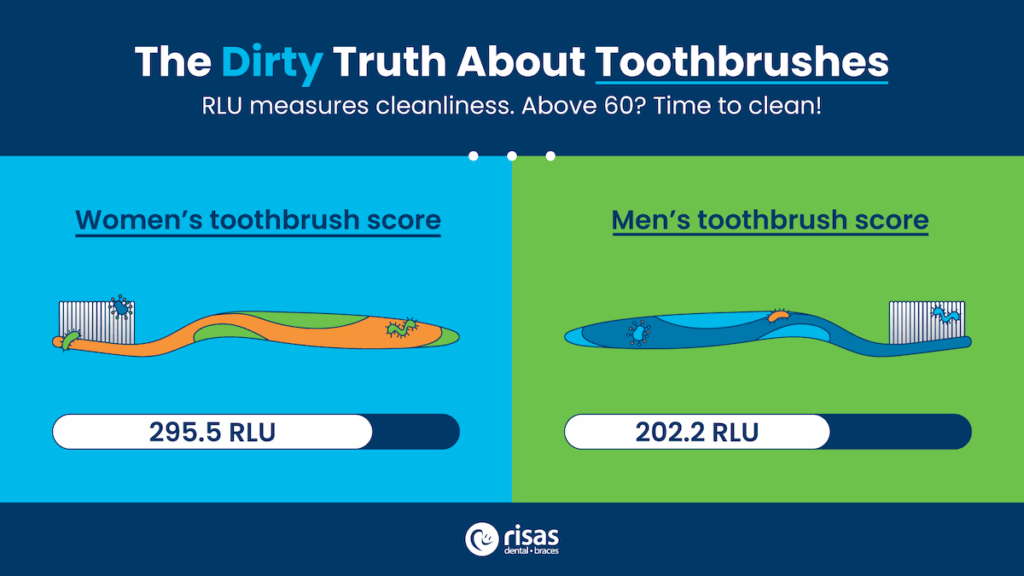
How clean are Americans’ toothbrushes?
Our research has uncovered some eye-opening results about the cleanliness of American toothbrushes.
The average RLU level for a toothbrush owned by a female participant sits at 295.5 RLU, while the acceptable range for cleanliness is between just 20-60. We did find variation however, with one toothbrush having a relatively low level of 80, while another showed a level of 3,837 RLU. Other brushes fell in the 134, 161, and 558 RLU range.
But what about our male participants? Well, the average RLU level was slightly lower (coming in at 202.2), yet we also found some significantly high figures. On two of the toothbrushes we swabbed, we found elevated RLU levels of 3,248 and 4,635.
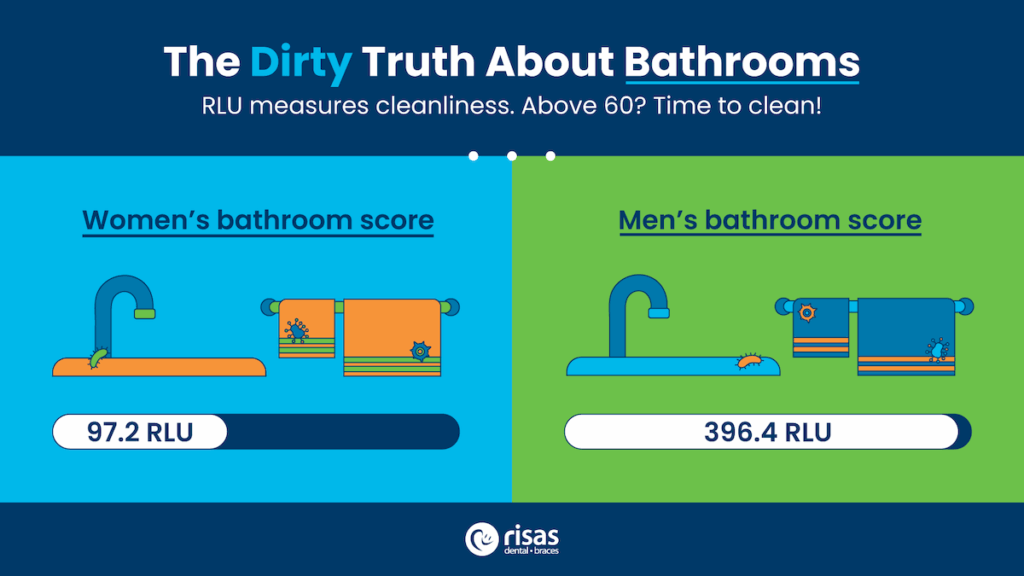
Bathroom cleanliness levels
Next, let’s take a look at the cleanliness levels in our participants’ bathrooms. The average female bathroom RLU score sits at 97.2, while we found a higher average score of 396.4 when swabbing male bathrooms.
Swabbing specific areas like door handles, sinks, and taps also revealed some interesting differences.
Female bathroom door handles are significantly cleaner (98 RLU compared to 457). Similarly, female participants’ bathroom sinks were also noticeably cleaner, with the right side of their sinks showing RLU levels of just 24, while male sinks showed an average of 668.
While the tap area in our male bathrooms had a slightly lower RLU of 252, female bathroom taps still came in cleaner (120 RLU).
Toothbrush cleanliness: What do the experts have to say?
To gain some professional insight, we asked Dr. Singh, from Winit Clinic, to shed some light on our findings:
“I've seen alarming data with high RLU levels associated with toothbrushes and sink basins. ATP bioluminescence testing provides an excellent measure of organic contamination, and with values as high as 4,635, it is likely that there is extensive presence of micro-organisms such as bacteria and biofilm. With the range for acceptability pegged between 20 and 60 RLU, toothbrushes and their environments are clearly well outside the cleanliness thresholds. This means that, unknowingly, people might be exposing themselves to bacteria every time they brush.”
“One of the most significant risks associated with using a contaminated toothbrush is that it could lead to oral infections. Once the pathogens settle on the bristles, they get introduced into the oral cavity, where they can cause gum disease, contribute to cavities, and even lead to systemic infections in those with low immunity. Long-term use of a contaminated toothbrush could be devastating to the oral microbiome, as it predisposes the mouth to colonization by more pathogenic bacteria, which then results in chronic inflammation of the gums and possibly other mouth-related complications.”
“Cross-contamination is another issue. Having toothbrushes stored in proximity in an unhygienic atmosphere creates the right environment for the bacteria to migrate from one brush to the other. High bacterial loads in shared bathroom spaces can promote the spread of illness-causing germs such as those associated with some gastrointestinal- and airway-tract infections. Since almost all of the places have high ATP, these areas definitely serve as important niches for bacterial growth. This reinforces the need to disinfect toothbrushes frequently, store them upright in a dry place, and replace them every three months or earlier if the bristles become worn or dirty.”
How to maintain optimal toothbrush hygiene
The good news is, with a bit of guidance, keeping your brush clean is relatively easy. Dr David Ryan, DMD at Risas Dental shares some top tips below:
- Storage matters: “Most people store their toothbrushes in a holder on their sink, however this can expose them to high levels of bacteria. Storing your brush in an upright position, as far away from the toilet as possible, can help reduce bacterial exposure. Also avoid using toothbrush caps, as they can trap in moisture promoting bacterial growth.”
- Rinsing isn’t enough: “While rinsing your brush after each use is helpful, you’ll need to give it a deeper clean every once in a while, too. Soak it in antibacterial mouthwash or a 3% hydrogen peroxide solution for 3-5 minutes. Afterwards, rinse thoroughly with warm water.”
- When to replace it: “It’s important to replace your toothbrush every 3-4 months (or sooner if the bristles start to fray). A well-worn brush is a breeding ground for bacteria, and it won’t clean your teeth effectively.”
While a clean toothbrush is crucial for your oral health, Dr Ryan also explains how important it is to choose the right type of brush and incorporate additional steps into your routine:
- Choose the right tools: "Not all toothbrushes are created equal, soft-bristled brushes are generally the safest and most effective for removing plaque without damaging your enamel or irritating your gums. Whether manual or electric, what matters most is your technique and consistency."
- Don't brush alone: "Your toothbrush is just one part of complete oral hygiene routine. Be sure to floss daily to remove food and plaque from between your teeth, where your brush can't reach. Adding an antibacterial mouthwash can also help reduce harmful bacteria and keep your breath fresh."
- Keep it personal: "Never share your toothbrush, even with family members, as this can spread germs and increase your risk of infections. Also, make sure each toothbrush in your household is clearly marked to avoid mix-ups."
When in doubt, ask your dentist: "If you're unsure whether you're using the right brush or following the best routine for your specific needs, your dentist can help you customize your oral care for maximum effectiveness."
Well, there we have it: our insights on how clean (or dirty) the average American toothbrush really is.
Brushing plays a key role in keeping our mouths healthy, but its effectiveness relies on proper care, storage, and regular cleaning. So, follow the above tips, and ensure you’re prioritizing brush cleanliness for a healthy smile.
And if you’re due for a check-up soon, find a location near you and book with Risas Dental today. From exams to cleanings and extractions, we offer a variety of affordable services and expert oral health guidance.
Methodology
The tests were conducted using an ATP bioluminescence test, which measures the amount of adenosine triphosphate - a molecule found in and around living cells - on a particular surface, indicating the level of cleanliness.
Swabs were taken using Hygiena’s UltraSnap Surface ATP Test and EnSURE Touch monitoring system to determine RLU results.
The holidays are filled with sugary treats and lots of fun. But all this excitement can lead you to forget about your oral health.
Neglecting oral hygiene during the holidays can leave you vulnerable to tooth decay and cavities. Protect your smile this year by following our tips for keeping teeth healthy throughout the season.
Maintaining Oral Hygiene During the Holidays
Holiday oral hygiene starts with good brushing habits. This means brushing with the proper technique and using the right equipment.
Finding the right toothbrush is key to building a good oral care routine. Soft-bristled brushes are ideal because hard bristles may damage your gums over time. Adult toothbrushes typically have 1-inch-tall heads but you may find a smaller size is more comfortable for you. Both manual and electric toothbrushes can be effective if used properly.
The American Dental Association recommends brushing your teeth twice each day — once in the morning and once in the evening. Proper brushing consists of moving the brush in short strokes over the outer and inner surfaces of your teeth.
But brushing isn't the only part of a healthy oral care routine. Flossing once daily can help you clean the spaces between your teeth that toothbrushes can't reach. Regular flossing can also help remove plaque that can build up on your teeth and may cause gum disease.
Smart Food Choices for Healthy Teeth
Holiday food is one of the best parts of the season. But crunchy and sugary treats can damage your teeth if you aren't careful. Limiting certain foods and choosing dental-friendly alternatives can help you enjoy the celebration without compromising oral hygiene.
Foods that are overly sticky, chewy, or crunchy are best eaten with caution. Things like toffee or candy canes can chip or crack your teeth when bitten and may send you to the dentist. Sugar-filled sweets including sugary drinks like hot chocolate and eggnog can also erode your teeth and lead to cavities.
Balancing these foods with some that can improve oral health is a good way to take care of your smile this season. Fruits and vegetables like carrots, apples, and celery can strengthen your teeth and gums while cheese can protect your teeth from acidic foods.
Make sure you drink plenty of water throughout the day to help wash away bacteria. Choosing a light-colored beverage can also prevent stained teeth when you want something other than water.
Balancing Treats and Oral Health
Maintaining good oral health doesn't mean skipping the holiday treats altogether. Incorporating a few dental-friendly strategies can help you make the most of the season while protecting your smile.
Sticking to your routine of brushing and flossing twice daily can help you keep your oral health on track. It's tempting to brush your teeth right after eating a sweet treat but try waiting at least 60 minutes before brushing to avoid erosion. Rinsing your mouth with water after eating can also help eliminate erosion.
Taking a teeth-cleaning kit along to parties is an easy way to maintain your routine even when you're out celebrating. Scheduling a cleaning with your dentist right after the holidays can also get rid of plaque and bacteria that built up throughout the season.
Holiday treats can make it hard to keep up with oral health. But with help from Risas Dental, your smile can stay bright and healthy all season long. Our bilingual team is standing by to give you the affordable dental care you've been looking for. Book an appointment today to get started.
Frequently Asked Questions (FAQs)
Can I enjoy holiday desserts without compromising my oral health?
It's possible to enjoy all sorts of holiday food without damaging your teeth — even sugary desserts. Protect your teeth by drinking plenty of water after each treat and brushing your teeth at least twice daily.
It's important to remember holiday desserts are best eaten in moderation. This prevents your teeth from being overloaded by sugar and bacteria. Balancing desserts with healthy, teeth-friendly foods can also reduce the damage caused by sugary sweets.
How can I keep my breath fresh during holiday social events?
Drinking water throughout the day can wash away the bacteria that leave an unpleasant odor in your mouth. It also prevents dry mouth — another cause of excess bacteria. Flossing helps eliminate food particles and bacteria between your teeth that a brush may not have access to.
Consuming sugar in moderation can minimize bad breath by reducing the amount of bacteria in your mouth. Keeping sugar-free gum on hand is another trick that can freshen your breath in a pinch.
Are there any natural remedies for soothing gum sensitivity caused by holiday treats?
Too many holiday treats can leave your gums feeling sensitive. But there are a few natural remedies that can provide some quick relief.
Saltwater rinses are useful for reducing inflammation and relieving pain quickly. Green tea, turmeric, and vanilla extract are also naturally anti-inflammatory. Chili peppers contain a compound called capsaicin that can also relieve pain when used continuously.
What should I do if I experience a dental emergency during the holiday season?
Dental emergencies can interrupt your holiday festivities. But serious concerns should be treated by a dentist as soon as possible.
You can still get the care you need during the holiday season. Find the nearest Risas Dental location near you to be seen as a walk-in for dental emergencies.
Can I use sugar substitutes or alternative sweeteners as a healthier option?
Alternative sweeteners don't affect your teeth the same way sugar does. This makes them a good alternative for sugary treats during the holiday season. But sugar substitutes can't replace good oral hygiene. Any holiday snack should be eaten in moderation and combined with a proper oral routine to keep your smile healthy all season long.
Halloween comes just once a year and there's nothing cuter than watching your children dress up and embody their favorite characters. It's a celebration filled with spooktastic fun but for many parents all that candy can be concerning. If kids consume endless amounts of sugar-filled treats, it leaves their mouths vulnerable to cavities and tooth decay. Thankfully, you don't have to deny your child all that deliciousness. When you prioritize oral health and swap out the sweet stuff for healthy Halloween treats, it's easy to create a fun and tooth-friendly celebration. Discover mouth-watering snacks your little ones will love, along with helpful tips to keep oral care a priority this spooky season.
Why Choose Healthy Halloween Treats?
It's no surprise that sugar-filled treats are tough on teeth, wearing them down and resulting in tooth decay over time. Soft sticky favorites such as gummy worms and Sour Patch Kids can do a number on your dental health, with residue remaining on teeth and pushing sugar directly against sensitive gum tissue and enamel long after you've finished eating. Hard candy may be even worse, as the longer it stays in your mouth, the more time it has to wreak havoc through plaque build-up, prolonged acid attacks, and potential chipping or breaking.
Overall, over consuming any sugary candy can create tooth decay, as the bacteria found within plaque — that thin sticky layer of film covering your teeth — interacts with sugar to produce acid. This acid harms teeth, slowly dissolving enamel to create visible cavities, holes, or even abscesses that require removal. Thankfully, a few easy tips can help you create a more tooth-friendly Halloween experience for the whole family.
Create a Tooth-Friendly Halloween Experience
Protect your family's teeth this spooky season by laying down the law. Limit candy consumption by separating it into piles based on type such as chocolate, chewy candy, and hard candy. Ration out treats a few times a week instead of letting little ones go at it as soon as they bring home their trick-or-treat bags. Get your kids into the habit of routinely brushing and cleaning teeth to remove all that sugar build-up and flossing to remove excess debris between teeth. When it's finally time to savor the sweetness, limit candy consumption to mealtimes. This works wonders, as the extra saliva your mouth produces during eating and drinking helps naturally remove food particles.
Finding Healthy Alternatives
Believe it or not, not all Halloween candy is terrible for your oral health. There are plenty of healthy options lining store shelves and even more you can create on your own. Healthier alternatives not only lower your child's risk of tooth decay but also provide nutrients without the sugar and get kids into healthy habits from a young age.
Healthy Halloween Snacks for All Ages
These healthy Halloween snacks are tasty and easy to make using ingredients you already have around the house:
- Apple monster mouths: Composed of apple slices, nut butter, and sliced almonds, this tasty caramel apple alternative makes an excellent after-school snack. Spread spoonfuls of nut butter on two apple slices. Pinch the slices together on one side so some of the nut butter squeezes out, then place sliced almond "teeth" in the nut butter for a treat that's as fun as it is tasty.
- Pumpkin patch hummus: Elevate your vegetable platter by arranging carrot and bell pepper sticks into the shape of a pumpkin and you've got a Halloween-worthy display ready for dipping. Incorporate veggies such as cucumbers, celery, and broccoli florets for additional flavor and color and provide hummus dip.
- Spooky spider eggs: The ideal addition to any Halloween snack platter, these spooky snacks are simple to make. Make deviled eggs as usual, then use half a black olive to create the spider body. Slice the other half of the olive into 8 thin strips to make the spider's legs.
Tooth-Friendly Candy Alternatives
If your child's still craving the sweetness of sugary candy, try avoiding hard or sticky varieties that act as bacterial breeding grounds. Along with top brands such as SmartSweets or Zollipops, try swapping them out for some of these flavorful favorites:
- Dark chocolate squares or mini bars: Dark chocolate is packed with powerful polyphenols and flavonoids that fight against odor-causing bacteria, bad breath, and tooth decay with lower sugar content than milk or white chocolate.
- Fruit leather or dried fruit strips: Fruit roll-ups are extremely sticky and leave lasting residue but fruit leather and dried fruit pack the same punch without the excess sugar and stickiness. Filled with vitamins and minerals, they make a nutritious addition to your child's lunch bag.
- Yogurt-covered fruit bites: These bite-sized treats provide a fresh burst of flavor without extra sugar and the yogurt adds a healthy dose of calcium and vitamin D.
Creative and Dental-Friendly Halloween Treats
Embrace your creative side with these fun dental-friendly treats. Let little ones get in on the action and make their own terrifying and tasty creations such as:
- Ghostly banana pops: These sweet treats take only a few minutes to make but create a Halloween filled with smiles. Simply slice frozen bananas in half, dip them in yogurt, and decorate with your choice of toppings such as mandarin oranges, kiwi slices, or chocolate chips. Arrange them in the shape of eyes and a mouth and your kooky ghosts will come alive.
- Witch's brew smoothie: Blend together spinach, banana, and pineapple to create a savory smoothie your kids (and you!) will request again and again. Ultra-nutritious and brimming with vitamins, this smoothie gets a spooky touch when you paint a creepy face onto your glass with a black permanent marker.
- Graveyard yogurt parfaits: Layer Greek yogurt into individual cups, topping them off with fruit and granola. Crumble a chocolate cookie on top to create a layer of "dirt" in each cup, then stick in a cookie to create a gravestone, drawing on "RIP" with orange and black food coloring.

Protecting Dental Health During Halloween
Halloween may be a festive time of year but it's still important to prioritize oral hygiene. Instead of emptying those filled-to-the-brim trick-or-treat bags and letting the kids go at it, encourage moderation. Set aside a few days when they can grab a handful of treats but keep healthy habits going strong. In addition to brushing and flossing twice daily, have your little ones wait 30 minutes after consuming Halloween snacks to brush thoroughly. This helps rinse away excess sugar residue, remove food particles, and reduce bacterial buildup. Likewise, chowing down on nutritious treats such as hard fruits and vegetables encourages healthy snacking habits, fills your kids with vitamins and minerals, and helps dislodge candy particles between the teeth. As long as you set the example for balanced Halloween habits, your children can have an extra-spooky and tooth-friendly October 31st.
However you spend this spooky season, keep your family's teeth strong and healthy with a checkup from Risas Dental. Our friendly bilingual teammates offer affordable dental care to keep your teeth looking their best, with affordable payment plans and no credit checks to make our services more accessible. Schedule your appointment today.
Frequently Asked Questions (FAQs)
Can healthy Halloween treats still be fun and festive?
Of course they can! Not only is it easy to find healthy Halloween candy alternatives but with some creativity and a few simple ingredients, you can easily spook-ify an array of snack options at home. Add olives for eyes and almonds for teeth or draw a freaky face on your smoothie glass — there are countless ways to make the holiday fun, festive, and healthy simultaneously.
Are there any store-bought options for healthy Halloween candy?
Yes! You'll find plenty of healthy options lining the shelves including sugar-free gum, which is one of the best choices because it stimulates saliva production to help prevent cavities. Likewise, chocolate contains powerful compounds that help fight bad breath and keep oral bacteria at bay. SmartSweets and Zollipops are two popular sugar-free brands with a variety of tasty treats.
How can I incorporate more vegetables into Halloween snacks?
Get creative by cutting and arranging vegetables into shapes such as skeletons, pumpkins, witches, and ghosts, then serve them with flavorful dip.
Are there any alternative sweeteners that are better for dental health?
Yes, artificial sweeteners such as stevia, sucralose, saccharin, aspartame, and tagatose are more beneficial to oral health than traditional sugar.
How can I promote oral health awareness during Halloween?
Let your kids know the importance of a regular dental routine, encouraging them to rinse with water after consuming candy to wash away leftover sugar. Before bed, make brushing and flossing a priority and limit the amount of candy kids consume overall. Instead of treats high in sugar content, serve and share healthy alternatives.
Many people rely on coffee to wake up in the morning or enjoy it as a delicious daytime treat. However, understanding the relationship between coffee and oral health is essential. Below, we'll explore the impact of coffee on your teeth and gums and explain how to keep your mouth healthy.
Coffee and Oral Health: Exploring the Impact
Drinking coffee correctly can positively impact your teeth. Let's look at the link between coffee and oral health.
Antibacterial and Anti-Inflammatory Properties of Coffee
Coffee has antibacterial properties, allowing it to kill bacteria that cause tooth decay. Research shows that drinking coffee can reduce your risk of cavities.
Although coffee also has anti-inflammatory effects, the evidence about coffee and gum health is unclear. Several studies show that coffee can protect against severe gum disease, while others say it can damage gum tissue.
Reduced Risk of Oral Cancers
Drinking coffee regularly could reduce your risk of mouth and throat cancers. It's thought that the antioxidants in coffee could reduce the risk of cancerous cell changes.
While there are some positive benefits for oral health, it's important to also explore the things to look out for when drinking coffee.
Understanding the Acidity of Coffee and Its Effects on Teeth
Coffee is acidic, although the pH level depends on the roasting process. According to the American Dental Association (ADA), drinking acidic beverages can increase your risk of enamel erosion by damaging the enamel layer of your teeth. This can expose the dentin and cause tooth sensitivity.

Preventing and Treating Coffee Stains and Discoloration
Tooth discoloration and stains are some of the most common complaints about coffee and oral health. Coffee contains tannins and pigments that can cause brown stains.
You can reduce the risk of coffee-stained teeth by following our tips and tricks for maintaining oral health while drinking coffee. Or, you could consider whitening treatments if you already have stained teeth. Look for the ADA Seal of Acceptance to ensure at-home whitening products are safe and effective. Scheduling an in-office whitening treatment with your dentist is the most effective way to treat tooth staining.
Coffee and Bad Breath
Coffee is famous for causing bad breath because of its strong odor, although a 2021 study discovered that Arabic coffee can reduce halitosis. However, the effect is only short-term — coffee appears to reduce bad breath immediately after drinking but doesn't improve halitosis long term.
Coffee Creamers, Sugar, and Oral Health
Adding sugar and creamers to your coffee could increase the risk of dental problems. Consuming sugary drinks increases your chance of developing cavities because the bacteria in your mouth produce acids when they break down sugar. These acids demineralize your teeth and cause decay.
Many coffee creamers also contain sugar. You can reduce your risk of cavities by choosing sugar-free creamer brands.
Tips and Tricks for Maintaining Oral Health While Drinking Coffee
You don't have to give up coffee to keep your mouth healthy. The following tips can help you enjoy coffee without damaging your oral health.
Use a Straw
Drinking coffee through a straw prevents it from coming into contact with your teeth and helps minimize staining. You can also limit contact by avoiding swishing the drink around your mouth.
Rinse With Water
Consider rinsing your mouth with water immediately after drinking coffee. Mouth rinsing can help remove tannins and pigments from the surface of your teeth.
Time Your Coffee Consumption
Wait at least 30 minutes to brush after drinking an acidic beverage to reduce the risk of enamel erosion. That's because your saliva can help repair your enamel. Therefore, it's a good idea to avoid drinking coffee just before you plan to brush your teeth.
Choose Healthy Options for Adding Flavor to Coffee
Syrups and flavorings often contain sugar. Consider switching to a sugar-free brand or adding natural flavorings such as 100% cocoa powder or cinnamon.
Choose the Right Toothpaste for Coffee Drinkers
The ADA recommends using fluoride toothpaste to prevent cavities. However, coffee drinkers could also consider toothpaste with ingredients to prevent enamel erosion or whitening toothpaste to remove surface stains. Choose an ADA-accepted brand to ensure the best protection for your teeth and gums.
Schedule Regular Dental Checkups and Cleanings
Visiting your dentist regularly can ensure any dental problems associated with drinking coffee are diagnosed and treated early. Having your teeth professionally cleaned can also remove coffee stains and discoloration.
Debunking Common Coffee and Oral Health Myths
There's a common myth that drinking coffee causes cavities. However, coffee could actually decrease your risk of tooth decay because it can reduce the amount of harmful bacteria in your mouth.
Consider drinking other tooth-friendly beverages alongside coffee. Water is a healthy option and unsweetened milk can also help protect against decay and reduce the effects of acidic food and drinks.
Keeping your mouth healthy doesn't have to mean giving up coffee. Risas Dental can help you maintain good oral health while enjoying coffee responsibly. Book an appointment today for affordable, expert support.
Frequently Asked Questions (FAQs)
Does drinking black coffee cause more stains than adding cream and sugar?
Adding milk to your coffee can reduce the risk of stains, so cream may have a similar effect. However, adding sugar may increase your risk of tooth decay.
How many cups of coffee are safe for my teeth each day?
How many cups of coffee it takes to stain or damage your teeth depends on your dental health. Your dentist can advise you on the best lifestyle choices for oral health.
Are there special toothbrushes for coffee drinkers?
Some toothbrushes and other dental hygiene products are marketed as suitable for coffee drinkers. However, you should always choose ADA-approved products to keep your mouth healthy.
Can I still have white teeth if I drink coffee regularly?
Drinking coffee regularly increases your risk of discoloration but you can reduce the effects by drinking through a straw and rinsing your mouth with water. Whitening treatments could be helpful if you have coffee-stained teeth.